Evidence-based plan · Kerala · Fitzpatrick IV–V

Your skin is not
dirty. It is sunburnt.

Everything you have been told about scrubbing tan away is backwards. This is what the dermatology research actually says about brown skin in a tropical climate — which kitchen ingredients earn their place, which ones will scar you, and a 90-day plan built for Kerala's weather, food and budget.

Built from6 research streams · ~120 sources
Honest ceilingEven tone, not fair skin
Cost₹1,200–1,800 to start
First resultsWeek 8–12
01 — THE PART NOBODY TELLS YOU

There are two kinds of dark in your skin. Only one of them can go.

Dermatologists split your skin colour into two separate things, and confusing them is why most people waste years and money.

ConstitutivePermanent

Your genetic baseline — the colour of skin that never sees sun, like your inner upper arm. Set by 17+ genes. Nothing safe and legal changes this. Not creams, not lasers, not glutathione drips, not amma's ubtan. It is not a defect. It is your face.

FacultativeReversible

The tan layered on top by UV. In dark skin this can be a 7–10× increase in visible pigment — which means the gap between your tanned face and your untanned arm is often much bigger than you assume. All of this can come back.

Hold your inner upper arm next to your face in daylight. The difference between those two is the entire honest scope of what any plan can achieve. For most Malayali men who work or commute outdoors, that gap is genuinely large — two or three shades of accumulated tan, plus dark marks from acne and shaving. Getting all of that back is a real, visible, worthwhile transformation.

What it is not is fairness. And chasing that last part is where people get hurt — which is section 04.

40–56
Days for your epidermis to fully renew itself — the biological speed limit on any tan fading
6–12
Weeks for a pure sun tan to fade if UV exposure genuinely stops
47–65%
Of people with brown skin get dark marks after acne — versus a small fraction of white skin
12
Months an acne mark can sit on your face. Dermal ones last years
The central paradox — read this twice

In Fitzpatrick IV–V skin, inflammation makes pigment. Injured skin cells release cytokines and prostaglandins that switch melanocytes on. So every scrub, every burn, every stinging lemon mask, every popped pimple triggers your skin to deposit more melanin exactly where you were trying to remove it. This is post-inflammatory hyperpigmentation, and it is the single most common reason brown skin gets patchier the harder someone works on it.

Rule that follows from this: if a treatment stings, burns, reddens or makes you flake — it is not working. It is actively producing the thing you are trying to remove.

You cannot scrub melanin off. It is inside living cells, not sitting on top like dust. Tanned cells must be shed by natural turnover. Scrubbing only adds the inflammation that makes more pigment.
02 — WHY KERALA IS THE HARD MODE

You live at 9° North. The sun here is not seasonal.

Most skincare advice is written for people who get four months of strong sun a year. You get twelve. Thiruvananthapuram's UV index sits between 10 and 14 every single month, peaking around 13.3 in September. The highest reading in the past year was 13.9. Anything above 11 is officially "Extreme."

10–14
UV index at solar noon, every month of the year. No safe season
30–70%
All that heavy monsoon cloud blocks. UV index 12 under cloud is still UV 6
9am–4pm
The daily window where UV exceeds the WHO protection threshold
74–89%
Relative humidity range in Kochi. There is no dry season
The monsoon myth

Grey sky feels safe. It is not. Cloud cover reduces UV by only 30–70%, and UVA — the wavelength that drives pigmentation and ageing — passes through cloud more readily than UVB does. September, deep in the rains, is statistically Kerala's highest-UV month. If you skip sunscreen from June to September you are unprotected for a third of the year during the period your skin is being pigmented hardest.

The visible light problem — this one is specific to you

Here is a finding that changes what sunscreen you should buy. Visible light — ordinary daylight, 400–700nm, no UV involved — triggers pigmentation in Fitzpatrick IV–VI skin, but not in white skin. It works through the Opsin3 receptor. This is why brown skin darkens in ways that standard sunscreen testing never predicted.

And SPF 50 does not block visible light. Controlled trials found that mineral SPF 50+ alone failed to prevent visible-light pigmentation in Fitzpatrick IV subjects. What worked was iron oxides — the pigments that make a sunscreen tinted. In a 5-month trial on melasma, tinted SPF50+ with iron oxides beat untinted SPF50+ with identical UV protection.

Practically: a tinted sunscreen is not a cosmetic preference for you. It is the only formula that covers the full spectrum that pigments your specific skin type. Look for CI 77491, CI 77492, CI 77499 in the ingredients — most brands don't advertise iron oxide content, so you have to read the list.

Humidity changes which products work

At 89% humidity your skin is not losing water — the air is saturated. Heavy creams and face oils, which work by sealing water in, have nothing useful to do here. What they do instead is trap sweat, sebum and fatty acids against your follicles. That produces three specific Kerala problems:

One traditional habit that is fully evidence-backed

The Kerala umbrella. A UPF-rated umbrella blocks 95%+ of UV, and carrying one in sunshine is already socially normal here in a way it isn't in most of India. Umbrella plus sunscreen substantially outperforms sunscreen alone. This is not an old-fashioned habit to grow out of — it is the single cheapest, highest-return thing on this entire page.

03 — THE KITCHEN CABINET, AUDITED

What actually earns a place on your face.

You asked specifically about vegetables and household things. Good news: a handful genuinely work. Bad news: most of the famous ones do nothing, and a few will injure you.

One structural caveat before the table. Almost every positive study on a natural ingredient used a standardised extract at a controlled concentration in a formulated base — not the raw thing from your kitchen. The gap is often 10–100× in concentration. Where that gap matters, I've said so.

IngredientVerdictWhat it genuinely doesHow to use it
Kasturi manjal
Wild turmeric, C. aromatica
UseThe correct turmeric for skin. Anti-melanogenic via curdione and germacrone, anti-inflammatory — and crucially it does not stain yellow the way kitchen haldi does. Evidence is in-vitro, not clinical, but the safety is excellent.Pinch mixed with curd or aloe gel. 10 min, rinse. 2× a week.
Aloe vera
Fresh leaf
UseAloesin competitively inhibits tyrosinase. A split-face trial on 31 Fitzpatrick III–V subjects showed significant melanin index reduction at 12 weeks. Excellent hydration with zero occlusion — perfect for humidity.Slice leaf, let the yellow latex drain off first (it's an irritant), scoop clear inner gel only.
Colloidal oatmealUseThe only DIY-adjacent ingredient with US FDA monograph status as a skin protectant. Avenanthramides calm inflammation, beta-glucan repairs barrier. Genuinely strong evidence.Buy the milled powder, not blended oats. Best for irritated or post-shave skin.
Green tea
Topical
MildEGCG downregulates 13 melanogenesis genes — in stabilised formulations. Brewed tea loses most EGCG to oxidation within hours, so your cooled cup is a fraction of the studied dose.Cooled compress after sun. Pleasant, mildly anti-inflammatory. Drink it too.
Honey
Raw
MildReal evidence for wound healing and antibacterial action. Good humectant. No evidence for depigmentation at any concentration.15–20 min mask. Safe, soothing, won't lighten anything.
NeemMildConsistent in-vitro antibacterial action against C. acnes and good antifungal data. No human face-acne RCT. Value is indirect: fewer pimples means fewer dark marks.Leaf paste or powder. Never undiluted neem oil on face.
Curd / dahiOverratedLactic acid needs 5–12% to exfoliate. Curd contains 0.5–0.9%. It is five to twenty times too weak to act as an AHA. It is a nice cooling protein mask and nothing more.Fine as a mask base. Do not expect exfoliation.
Besan / gram flourCarefulPurely a physical abrasive, no bioactive. Safe as a mask that dries and rinses off. Dangerous the moment you scrub it — microtears trigger the PIH cascade in section 01.Apply, let dry, rinse gently with water. Never rub it off.
Multani mittiCarefulGenuine oil absorption via montmorillonite clay chemistry. But the same absorbency strips your lipid barrier and triggers rebound oil if overused.Max 1–2× a week, oily skin only. Never if your skin feels tight.
Rice waterFolkloreFerulic acid works at 1% in a formulated cream. Rice rinse water delivers well under 0.1%. The inositol claim has essentially no evidence.Harmless. Also pointless.
CucumberFolklore95% water. The "benefit" is that it is cold. No compound in it depigments anything.Cooling compress. That is the whole story.
Potato juiceFolkloreThe catecholase claim is backwards — that enzyme oxidises phenols, which is the melanin-building direction, not the inhibiting one. Zero clinical basis.Skip entirely.
Tomato
Applied to skin
FolkloreLycopene is genuinely photoprotective — eaten. It's fat-soluble and does not cross the stratum corneum from tomato pulp. Rubbing it on does nothing.Put it in your sambar instead. Cooked, with oil.
PapayaFolklorePapain needs pH 6–7 and 65°C to work properly. Neither exists on your face. Ripe papaya has almost no active papain left.Ripe only. Avoid if latex-allergic.
Coconut oil
On the face
NoComedogenicity 4/5. The Thrissur study found virgin, mill-extracted and Parachute all equally pore-blocking — and in Kerala humidity it also feeds Malassezia.Body and hair: excellent, genuinely evidence-backed. Face: stop.

Patch test everything on your inner forearm for 48 hours before it touches your face. "Natural" and "safe" are unrelated concepts — plant compounds are among the most documented contact allergens in dermatology.

Kasturi manjal wild turmeric rhizomes
Kasturi manjalNot the same plant as cooking haldi. Ask for it by name — this is the one that doesn't stain.
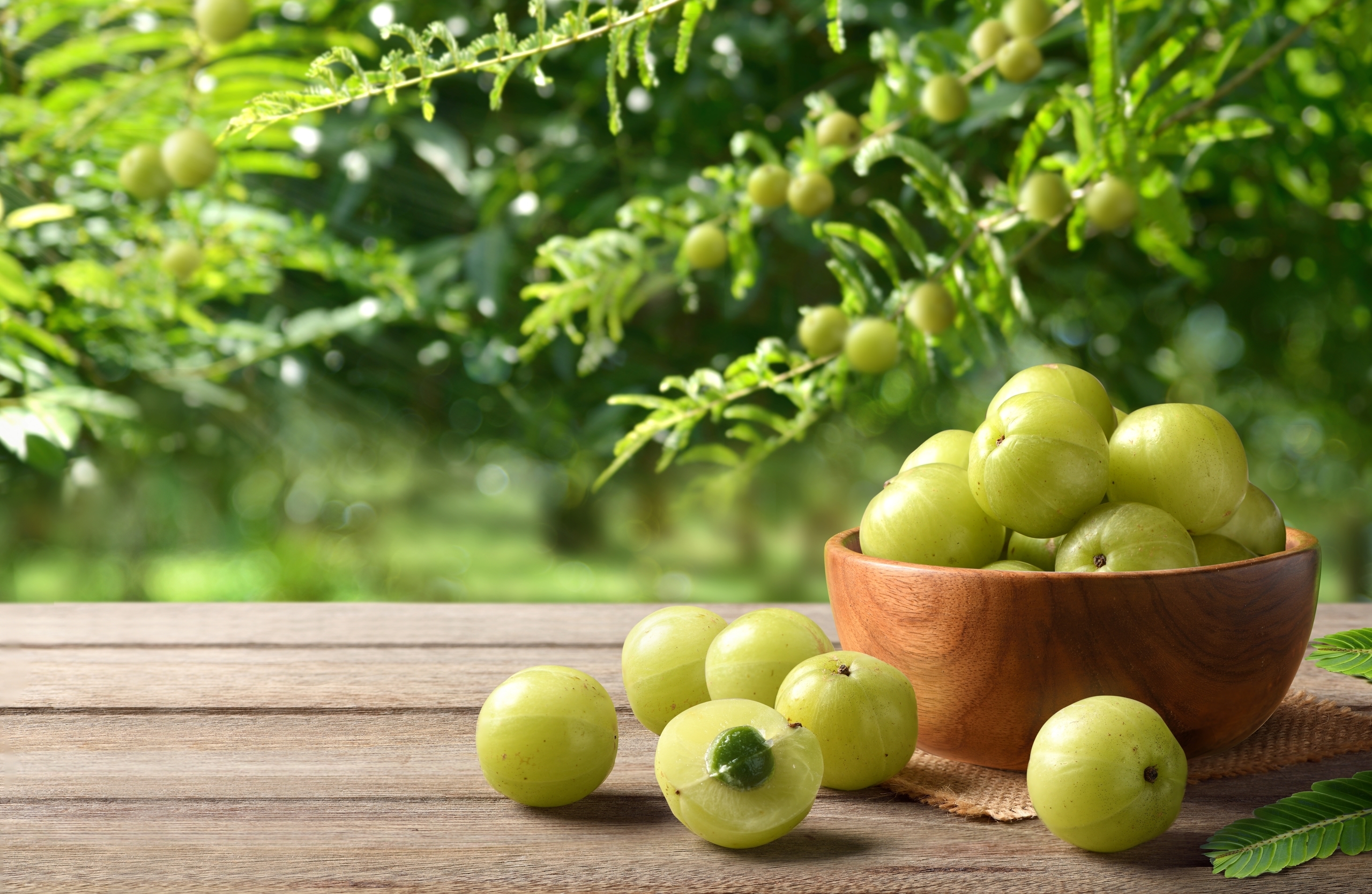
Fresh amla Indian gooseberry
AmlaUp to 445mg vitamin C per 100g. Eat it — don't rub it on. Oral and topical vitamin C are different tools.
Fresh moringa drumstick leaves
Muringa ela~13,000mcg beta-carotene per 100g. One of the highest-value skin foods growing in Kerala backyards.
Your realistic kitchen shortlist

Kasturi manjal + fresh aloe gel, twice a week, ten minutes. That's it. That is the entire defensible DIY component of this plan. Everything else in your kitchen is either neutral or a liability. The heavy lifting is done by three cheap things from a pharmacy — sunscreen, niacinamide, and eventually a retinoid — plus what you eat.
04 — THE HARM SECTION

What will actually damage your face.

This is the most important section on the page. Every item here circulates widely on Indian YouTube and Instagram, and every one has documented case reports behind it.

⚠ Lemon and lime — genuinely dangerous where you live

Citrus contains furocoumarins (psoralens). On skin, in sunlight, they bind to DNA and cause direct photochemical injury — not an allergy, this can happen to anyone. It is called phytophotodermatitis, and the published cases describe painful 3cm blisters that heal into deep, sharply-outlined hyperpigmentation lasting months.

Read that again in the Kerala context: you would be applying a photosensitiser to your face in a UV index 12 environment. The most likely outcome of a lemon "de-tan" pack is a patch permanently darker than what you started with. Lemon juice is also pH 2.0 — caustic enough to strip your acid mantle even indoors.

Never. Not diluted, not at night, not mixed with honey. Not on your face, not on your underarms, not on your knees.

The fairness cream problem — with the actual numbers

Skin-lightening products are roughly half of India's entire skincare market. That market is not benign, and the Indian dermatology literature on it is grim.

4,174
ppm mercury measured in a Fair & Lovely Max Fairness sample. The WHO limit for cosmetics is 1 ppm
29.5%
Of 723 new dermatology outpatients in rural North India had misused topical steroids
78%
Of those steroid creams came from pharmacists and local healers, not doctors
40%
Of steroid-damaged-face patients in one Karnataka study started the cream for fairness
How the trap works — the mechanism, so you can recognise it

Many OTC "fairness" creams are a triple combination: hydroquinone (depigments) + tretinoin (exfoliates) + a potent corticosteroid. The steroid is there to suppress the irritation the other two cause, so the cream feels lovely and produces fast visible lightening. Then:

Skin becomes steroid-dependent → you stop → violent rebound redness and burning → you restart → repeat. The end state is Topical Steroid Damaged Face: permanent facial redness, visible broken capillaries, steroid acne, thinned skin, and — the bitter irony — pigmentation worse than what you began with. There are also documented cases of kidney disease (membranous nephropathy) from two months of a mercury-containing cream.

Avoid entirely: Betnovate, Dermovate, Clop-G, Panderm Plus, Momate, Skinlite, Melalite, and any cream promising results in days, sold without an ingredient list, or recommended by a pharmacist or beautician for "all purposes."

Also on the no list

Glutathione injections and IV drips. No large RCT supports them. India's drug regulator CDSCO issued a public notice clarifying that cosmetic products including glutathione cannot legally be administered by injection, and reports include thyroid dysfunction, kidney and nerve damage. Salon de-tan packs and bleach facials. Hydrogen peroxide oxidises surface melanin for a few days, then it returns — while the oxidative stress plausibly makes long-term pigmentation worse.

05 — THE ROUTINE

Four products. Five minutes a day.

Topical treatment adherence is the worst of any category in dermatology, and the strongest predictor of whether someone sticks with it is how few steps there are. So this is deliberately small. Do not add to it.

One thing to internalise before the list: in a year-long study on Fitzpatrick IV–V women, daily sunscreen alone — with no active ingredients at all — significantly improved existing hyperpigmentation. Sunscreen is not the boring prerequisite step. It is the treatment. Everything else is an accelerant.

Morning3 minutes
1
Gel cleanserCool water. No scrubbing, no rough cloth. 20 seconds.
2
Sunscreen — SPF 50 PA++++Tinted with iron oxides if you can find it. Half a teaspoon for face and neck — this is far more than feels natural, and under-application is why most people get a fraction of the SPF on the bottle. Reapply midday if you're outdoors.
Night2 minutes
1
Gel cleanserSunscreen, sweat and sebum have to come off properly or they feed Malassezia overnight.
2
Niacinamide 10%3–4 drops. Blocks melanosome transfer into skin cells and controls oil. Very well tolerated in brown skin.
3
Light gel moisturiserOnly if skin feels tight. In Kerala's humidity many people genuinely don't need this daily.

What to buy, and what it costs

All of this is available on Nykaa, Amazon India or any decent Kerala pharmacy. Starting kit is roughly ₹1,200–1,800 and lasts about two months.

StepProduct optionsPriceNotes
Sunscreen
Non-negotiable
Re'equil Ultra Matte Dry Touch Gel SPF50 PA++++ (50g)
Minimalist SPF50 PA++++ (50g)
Lakme Sun Expert Dry Matte Fluid SPF50 (50ml)
₹645
₹399
₹499
All three are matte, no white cast, built for Indian humidity. Re'equil holds up best outdoors; Minimalist is the best value and fragrance-free.
CleanserCetaphil Oily Skin Cleanser (125ml)
Minimalist Salicylic Acid + LHA 2% (100ml)
₹566
₹285
The salicylic one is better if you have active acne or clogged pores. Twice daily — over-cleansing causes rebound oil.
NiacinamideMinimalist Niacinamide 10% (30ml)
The Derma Co Niacinamide 10%
₹599
₹499
Start here, not with acids. Zero photosensitivity, works on both oil and pigment.
MoisturiserMinimalist Vitamin B5 10% gel (50g)
Neutrogena Hydro Boost Water Gel
₹349
₹799
Gel only. No creams, no face oils, no coconut oil.
Azelaic acid
Add from week 5
Minimalist Azelaic Acid 10% (30ml)₹599Underused in India and unusually well-suited to you: anti-pigment, anti-inflammatory, antibacterial and anti-Malassezia. Targets overactive melanocytes only, so no patchy bleaching.
Retinoid
Only from week 9
Adaferin 0.1% adapalene gel (15g)
Generic adapalene 0.1%
₹273
₹75–150
Strongest evidence for acne marks. Increases sun sensitivity — do not start this unless sunscreen is already an unbreakable daily habit.
Vitamin C
Optional
Minimalist Vitamin C 10% (ethyl ascorbic acid)₹299Choose a stable derivative, not L-ascorbic acid — LAA oxidises within weeks in Kerala heat. If it turns orange, it's dead.

Never introduce two new actives at once. If something stings persistently, stop it — remember that irritation produces pigment in your skin type.

Weekly, not daily

Shaving — where most Malayali men's uneven tone actually comes from

If you have dark patches along your jaw and neck, this is probably not tan. It is pseudofolliculitis barbae — hairs curling back into the skin, causing chronic inflammation, each episode depositing pigment. In Fitzpatrick IV–V that pigment sits deeper and lasts 6–24 months, and UV exposure darkens it further. It is a self-renewing loop, and no serum will fix it while the cause continues.

06 — EAT FOR YOUR SKIN

The vegetable finding is real — but it works from the inside.

You asked about vegetables. Here is the genuinely interesting part of that question, and it is not about rubbing them on your face.

Researchers at St Andrews ran a series of studies on dietary carotenoids — the pigments in carrots, pumpkin, tomato, moringa, spinach. Carotenoids deposit in your skin and produce a measurable warm golden shift in tone. When observers were asked to rate faces for health and attractiveness, they consistently preferred the carotenoid glow over a tan. Given digital tools to make a face look as healthy as possible, people dialled up carotenoid colour more than melanin.

A six-week longitudinal study found the threshold: an increase of 2.91 portions of fruit and vegetables per day produced a perceptibly healthier skin appearance. Roughly 3.3 portions for perceptibly more attractive. Six weeks. No product involved.

+2.91
Extra daily servings of fruit & veg needed for a visible healthy-tone shift in 6 weeks
445mg
Average vitamin C per 100g of amla — about 5× your entire daily requirement
2.7g
Omega-3 per 100g of ayala. Mathi gives 1.5–1.8g. Both are cheap here
70–100%
Vitamin D deficiency prevalence in India — despite all this sunshine
The vitamin D tension — worth being honest about

I've just told you to block the sun year-round, and India has a 70–100% vitamin D deficiency rate. Melanin means you need roughly 30–40% more UV exposure than a white person for the same synthesis. These facts genuinely pull against each other.

The resolution is not unprotected midday sun. At UV index 12 you would accumulate serious photodamage long before meaningful vitamin D. Instead: eat mathi and ayala (mackerel gives ~1000 IU per 100g), get brief early-morning light before 9am on arms and legs, and ask a doctor to test your 25(OH)D and supplement properly — typically 1000–2000 IU/day of D3 as a baseline. This is the correct answer, not sun exposure.

A day of Kerala eating, optimised

Not a diet. Just your normal food, tilted.

MealWhat to eatWhy it matters
MorningPuttu made with matta rice flour + kadala curry + banana. One or two fresh amla. Green tea instead of sweet chai.Matta rice has GI under 68 versus 64–72 for polished white, plus significantly higher phenolics and anthocyanins. Kadala's protein and fibre blunt the glucose curve further. Amla covers your vitamin C several times over.
LunchMatta rice (moderate portion). Sambar with drumstick pods and muringa ela. Mathi or ayala curry, 2–3 pieces. Cheera thoran with coconut. Small cup of curd.The single highest-value meal here. Muringa leaves carry ~13,000mcg beta-carotene per 100g; drumstick pods 141mg vitamin C. The fish delivers 2–4g EPA+DHA plus vitamin D. Crucially, the coconut in the thoran provides the fat carotenoids need to absorb — this pairing is nutritionally optimal, not a compromise.
EveningPapaya. A handful of cashews or pumpkin seeds. Not banana chips.Papaya gives beta-carotene plus lycopene. Pumpkin seeds are among the best plant zinc sources — and zinc has meta-analysis support for reducing inflammatory acne lesions.
DinnerKerala vegetable stew with carrot, mathanga and beans. Egg thoran. Small portion of rice or roti.More carotenoids in a coconut-milk base that aids their absorption. Eggs add vitamin D, zinc and selenium.
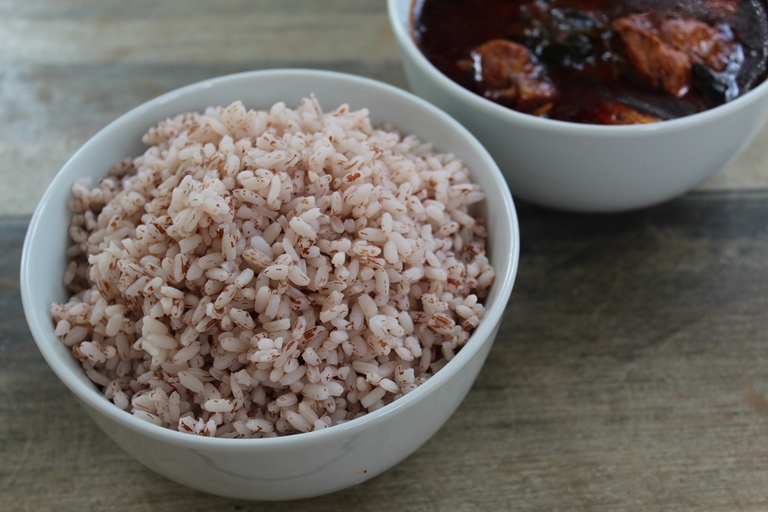
Kerala matta red parboiled rice
Matta riceThe traditional Kerala grain, and the single most useful carbohydrate swap available to you.
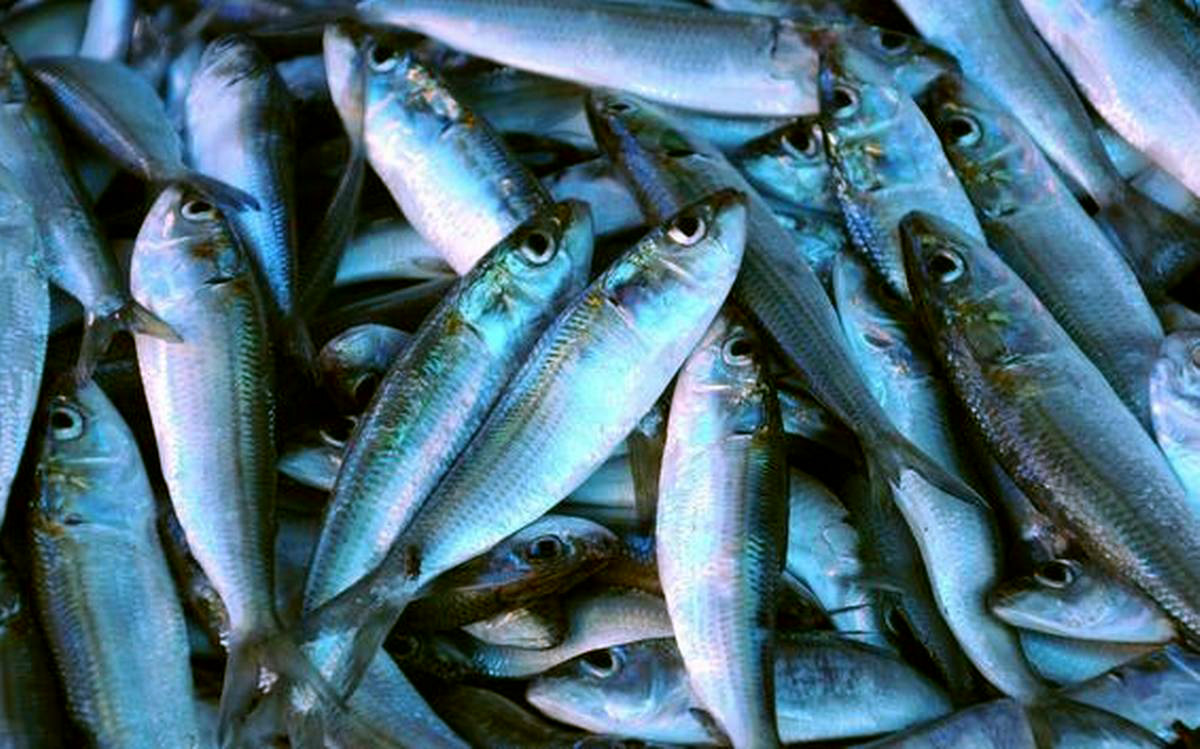
Fresh Kerala sardines mathi
Mathi1.5–1.8g omega-3 per 100g, plus vitamin D. Among the cheapest fish at any Kerala market.
Amla Indian gooseberry
AmlaTwo a day covers vitamin C comfortably. Fresh beats powder — heat degrades it.

What to pull back on

Don't waste money on

Collagen supplements. A 2025 meta-analysis of 23 RCTs found the apparent benefit vanished entirely once industry-funded studies were separated out — no significant effect on hydration, elasticity or wrinkles in independent trials. High-dose biotin. All 18 published cases of benefit involved people who were actually deficient; there is no evidence for anyone eating a normal diet. It also skews thyroid and troponin blood tests, which is a genuine clinical problem. Spend the money on mathi.

07 — THE 90-DAY PLAN

Ninety days, in three phases. Add nothing early.

Between 20 and 30% of people prescribed a retinoid quit within eight weeks, and the dropout peaks in weeks three to seven — precisely when skin often looks temporarily worse before it turns. Almost everyone who quits does so because nobody warned them. So: consider yourself warned, and build the ramp accordingly.

Phase 1 · Days 1–30 · Build the floor
Two habits, nothing else

Sunscreen every morning. Cleanser plus niacinamide every night. That is the whole phase. It will feel insufficient — resist that feeling. You are not treating anything yet, you are building the platform everything else stands on, and adding a fourth product in week two is the single most common way this fails.

  • Write the if-then plan down: "After I brush my teeth in the morning, I will apply sunscreen." Specific cue, specific action. This format has a meta-analysed effect size of d≈0.46 when it names both a time and a place — it is the best-evidenced behaviour change tool in the literature.
  • Put the sunscreen physically next to your toothbrush. Every step of friction between you and the bottle reduces the odds you use it.
  • Start the Sunday photo. Day 1 baseline, same window, same time.
  • Begin the food changes now — they're independent of the skincare and the carotenoid effect shows up around week 6.
  • Get the vitamin D test done.

Expect: nothing visible. Possibly slightly less oiliness by week 3–4. That is correct and on schedule.

Phase 2 · Days 31–60 · One addition
Azelaic acid, alternate nights

Only if the first two habits now happen without thinking about them. Add azelaic acid 10% on alternate evenings, on the nights you skip niacinamide. Mild tingling for the first week is normal; persistent burning is not.

  • If you shave, fix the technique this month. It's free and it addresses the actual cause of your jawline pigmentation.
  • Around week 6–8 the first real changes appear — usually clarity and evenness rather than lightness. Compare photos, not memory.
  • If you have small itchy uniform bumps on forehead or hairline that aren't responding, suspect Malassezia, not acne. Ketoconazole 2% shampoo as a 5-minute face mask, twice weekly.

Expect: visibly calmer skin. Fewer new marks. Existing marks beginning — only beginning — to soften.

Phase 3 · Days 61–90 · The heavy tool
Adapalene, carefully

Only start this if sunscreen has been genuinely unbroken for two months, because adapalene increases photosensitivity and starting it without that foundation in a UV index 12 climate will make your pigmentation worse, not better.

  • Pea-sized amount for the whole face. Two nights a week for the first month, then three, then build slowly across several months. Nightly is a destination, not a starting point.
  • Buffer it: moisturiser first, then adapalene on top. This measurably reduces irritation without much loss of effect.
  • Never combine it with azelaic acid or acids on the same night during the ramp.
  • The purge is real. Weeks 3–5 of adapalene often bring flaking and a cluster of spots along the jaw and chin. These are existing microcomedones being pushed out faster, not new acne. It peaks around week 4 and reverses by week 6–8.

Expect: a temporary dip, then the clearest skin of the whole programme. Day 90 photo against Day 1 is where the work becomes undeniable.

Honest timeline of results

Weeks 1–4: nothing visible. Weeks 6–8: texture, oil control, fewer new marks. Months 3–4: genuine evening of tone; tan meaningfully receded. Months 6–12: old acne marks substantially faded; you are approaching your actual baseline. Dark circles are the exception — most of that is structural and dermal in South Asians (one Indian study found 19.5% had a direct family history), so expect modest improvement at best and be sceptical of anyone promising otherwise.

08 — THE PERSONAL GROWTH PART

The things that fix skin are just the things that constitute a functioning life.

You asked about personal growth and skincare together, which is a sharper instinct than you may have realised. Sleep, food, stress, sun discipline, and the ability to do a small boring thing daily for three months — that list is the skin protocol, and it is also the foundation of nearly every other kind of self-improvement. The skin is just where the scoreboard is visible.

Forget 21 days

The "21 days to form a habit" line comes from a 1960 book by a plastic surgeon who noticed patients took about three weeks to adjust to a new face after surgery. He ran no study. Three qualifiers got lost over sixty years of repetition.

The actual research — Lally and colleagues at UCL, 96 participants tracked daily — found a median of 66 days to reach automaticity, with a range from 18 to 254 days. A 2024 meta-analysis of 20 studies landed in the same 59–66 day region. Roughly half the original participants hadn't got there even at day 84.

This is why the plan is 90 days and not 21. You are not weak if it still feels effortful in week six; you are exactly average.

66
Median days to habit automaticity — range 18 to 254. Not 21
0.46
Effect size of if-then plans that specify both a time and a place
25%
Lower depression risk at 150 min/week of moderate exercise
50%
Increase in time-to-fall-asleep from bright screens at the same brightness

Never miss twice

The mechanism that kills routines isn't missing a day. It's the story you tell about missing a day. Psychologists call it the abstinence violation effect: you lapse, you attribute it to something permanent about yourself ("I have no discipline"), that attribution produces shame, and shame — unlike guilt — reliably predicts more of the behaviour you're trying to stop, not less. Then you quit, not because of the lapse but because of the interpretation.

Kirschenbaum and Tomarken found that all-or-nothing thinking predicted abandonment better than the actual number of lapses did. In the Lally habit study, missing a single day did not measurably affect the trajectory at all.

So the rule is not "never miss." It's never miss twice. One skipped night is noise. Two is the beginning of a pattern. Return the next day with no ceremony and no self-commentary.

The four levers that also happen to be skin treatments

Grooming changes how you see yourself before it changes how you look. In two psychophysical experiments, people who overestimated their own body size judged it significantly more accurately after grooming — with no change in appearance at all. The act itself moves the attitudinal component of body image.

On fairness — worth saying plainly

Skin-lightening is roughly half of India's skincare market, projected at $561 million by 2033. In one Mumbai survey, 38% of adults used lightening products. Fair & Lovely was renamed Glow & Lovely in 2020; the formula didn't change, and the advertising still codes darkness as the problem and lightness as the resolution. The vocabulary moved. The hierarchy stayed.

The research on this is uncomfortable. Structural equation modelling on South Asian participants found exposure to colourist messaging predicts internalised colourism, which predicts lower skin-colour satisfaction. And two Indian experiments found that making people feel disempowered increased their preference for stronger, riskier lightening products specifically — the industry's best customer is someone who has been made to feel small.

I'm not going to lecture you. Wanting to look good is completely legitimate and this whole page exists to help you do it. I only want to point that want somewhere it can actually be satisfied. Clear, even, healthy, well-groomed skin at your own tone is entirely achievable in six to twelve months, and it is what people actually register when they look at you. Fairness is a different thing, it's sold by an industry with mercury in the jar, and it does not deliver what it advertises even when it works.

One quiet note, offered without alarm: if appearance concern starts taking more than an hour a day, or drives repeated mirror-checking and reassurance-seeking, or makes you avoid people — that's worth talking to someone about. It responds very well to treatment. Wanting better skin isn't that. But it's worth knowing where the line sits.

09 — WHEN TO STOP SELF-TREATING

Four things a dermatologist should see.

The one-line version of this entire page

Wear tinted SPF 50 every single day including monsoon, stop scrubbing and stop putting lemon on your face, use niacinamide at night, eat three more servings of vegetables and two more fish meals a week, sleep properly, and give it ninety days. That is 90% of the achievable result, and none of it costs much.